
A practical, safety-first guide to riding a scooter or motorbike and driving a car in Bali during rainy season
Bali’s rainy season can still be an excellent time to travel. Roads are quieter at times, landscapes look greener, and many days still have long dry windows. The key is understanding how quickly conditions can change and adjusting your riding or driving habits accordingly...

Quick rainy-season choice: A scooter or motorbike can still make sense for experienced riders taking short, flexible trips who can wait out a downpour. Choose a for family, luggage, fixed timings, long or mountain drives, or rain at night. If visibility is poor, water hides the road surface, or the bike feels unpredictable, stop somewhere safe and wait rather than continuing. Compare before you go, then browse the .
Bali’s rainy season can still be an excellent time to travel. Roads are quieter at times, landscapes look greener, and many days still have long dry windows. The key is understanding how quickly conditions can change and adjusting your riding or driving habits accordingly.
This guide is written for tourists who want to stay mobile in the wet season, whether you choose a scooter or motorbike, or a car. It focuses on real-world safety, comfort, and route planning across popular areas like Canggu, Seminyak, Ubud, Jimbaran, Uluwatu, Nusa Dua, Sanur, and Denpasar.
Rainy season in Bali is commonly described as the late-year through early-year period. The exact timing varies by year and by area, but most visitors experience a pattern of changing conditions rather than continuous all-day rain.
What tourists typically notice:
If you plan with flexibility, rainy season is manageable. The most important adjustment is avoiding unnecessary risk when visibility is poor or floodwater appears.
Both options can work. The best choice depends on your experience level, distance, schedule, and whether you travel with family.
If you want to browse options first, start here:
Choose a scooter or motorbike if:
Choose a car if:
Practical rule: if you expect night travel during rain, a car is the safer choice for most tourists.
Need help choosing bike vs car for rainy season?
Tell us your itinerary, daily schedule, and riding experience. We will recommend the safest option for your routes, and suggest the best vehicle type for wet roads.
Explore the catalog
Contact us on WhatsApp — +62 853-3777-7770
Visit our office: Google Maps — Jl. Uluwatu II No.10, Jimbaran
Rain exposes small issues fast. Do a short check before you start.
If you want deeper context on common beginner pitfalls, see: Common tourist mistakes
For helmet safety fundamentals, see: Helmet safety guide
Two-minute handover check (especially in rainy season)
Before you accept any rental, confirm tires with good tread, reliable brakes, and working lights. If anything feels off, request a replacement before you start riding or driving.
BaliBikeHouse Rental Catalog
Contact us on WhatsApp — +62 853-3777-7770
Visit our office: Google Maps — Jl. Uluwatu II No.10, Jimbaran
Rain riding is less about bravery and more about discipline. Most incidents come from rushing, overconfidence, or misjudging puddles.
Visual guide: Smooth control on wet roads
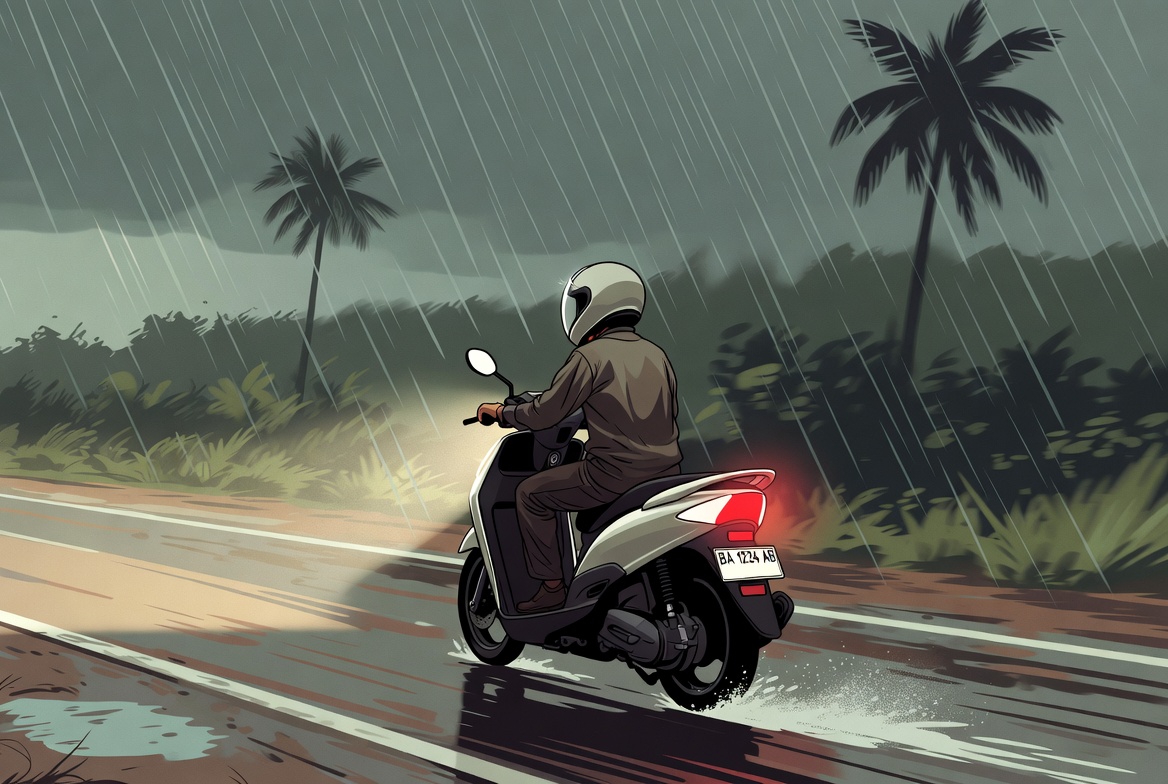
If traction feels unpredictable, stop somewhere safe and wait. Rain intensity can drop quickly.
Car driving is usually more comfortable in rain, especially for families, airport runs, and long routes. But wet roads still require calm decisions, and you must anticipate scooters reacting suddenly to puddles and potholes.
Visual guide: Safe driving habits in heavy tropical rain
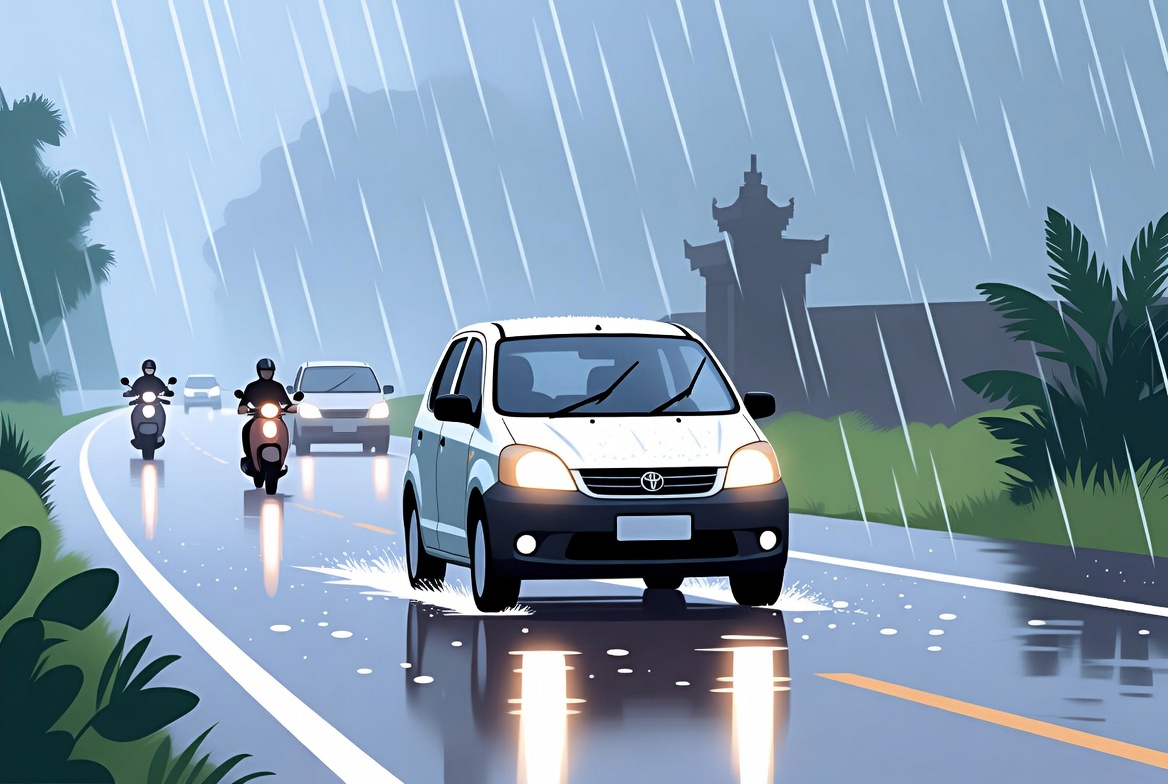
If you cannot clearly see the road surface under the water, do not drive into it. Depth can change within one meter, and hidden damage can be expensive.
Rainy season can create localized problems:
Practical habits:
You do not need a huge kit, but a few items significantly improve comfort.
Packing checklist: Rainy season essentials
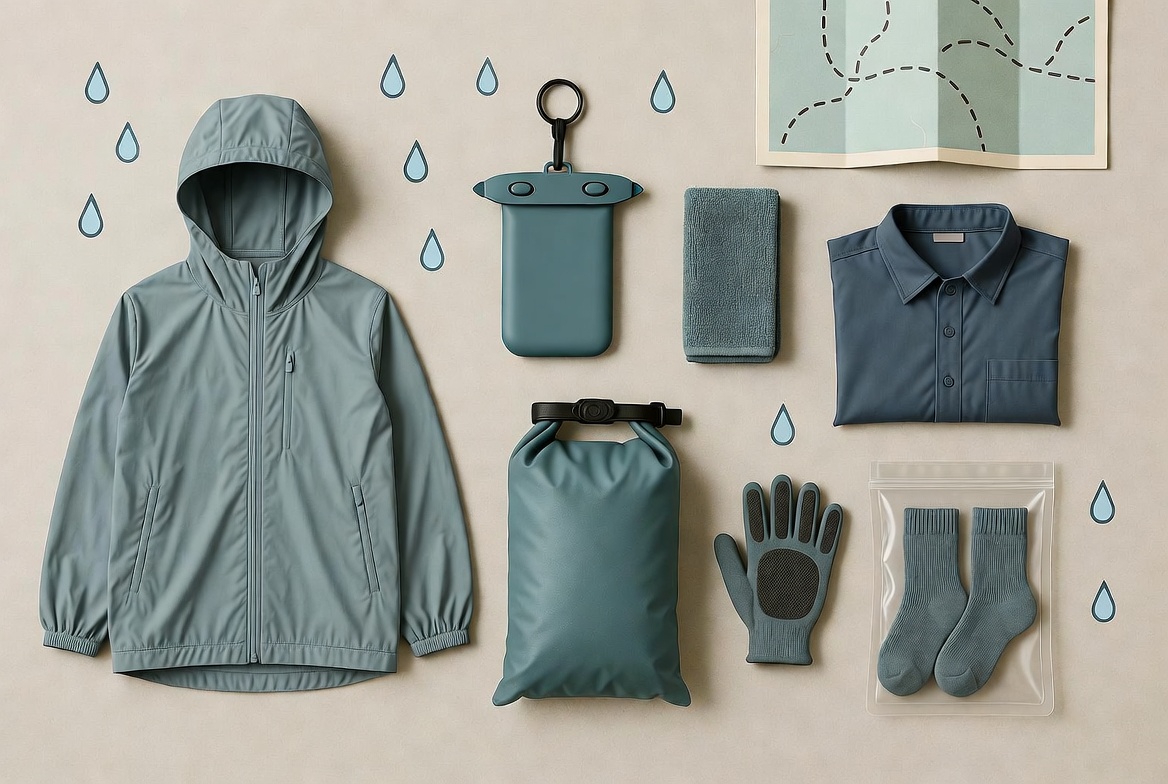
Local tip: you can buy ponchos everywhere in Bali. Prioritize fit and visibility over ultra-thin plastic.
Rain season has genuine advantages:
The key is planning flexibility. Build buffer time, and be willing to pause during the heaviest bursts.
For day-to-day planning:
Simple rule: if conditions feel uncomfortable, they are likely unsafe for an inexperienced rider. Adjust your plan.
If you want a broader overview of Bali transport decisions and planning, you can also read: Bali Vehicle Rental Guide 2026
Often it rains in bursts. Some days are dry, some have multiple downpours. Plan flexibility.
It can be, if you ride conservatively, avoid night rain rides, and use a properly maintained vehicle with good tires and lights.
Reduced visibility, slippery surfaces, and misjudging puddles or flooded sections. Overconfidence is a close second.
If you have limited riding experience, consider a car, especially for longer routes or night travel.
Turn around or wait. Do not assume it is shallow. Floodwater hides holes and debris.
For most tourists, a car is safer and less tiring in heavy rain.
Basic rain protection and waterproof storage for phone and documents covers most needs. Tires and helmet quality matter more than expensive gear.
If rain changes your route, compare options in the Bali rental catalog, switch to car rental in Bali for heavy-weather days, and review delivery, deposit, return, and cancellation terms in the exact listing or checkout flow.
If you are still deciding between two wheels and four, read Scooter or Car Rental in Bali: When Does Each Option Make More Sense?. If you want the deposit and insurance basics before checkout, read Do You Need a Deposit or Insurance for Scooter Rental in Bali?.
If you want, share your itinerary and we will help you choose a rain-season-friendly vehicle based on your routes, timing, and riding experience.
A short, practical checklist to reduce risk on wet roads.
Check weather and your route
Before a long or mountain trip, check the weather and traffic, leave extra time, and prefer main roads over narrow shortcuts after intense rain.
Inspect the vehicle and visibility
Before accepting the rental, check tires, brakes, and lights; for a car, check wipers and defogging, and for a bike, make sure the visor and mirrors are clear and stable.
Use smooth controls
Slow down early, brake progressively, avoid sudden turns and hard acceleration, and keep the bike straight if traction feels uncertain.
Leave more space and avoid standing water
Increase following distance and go around puddles or standing water whenever possible, because the road surface and depth may be unknown.
Stop safely when visibility drops
If visibility becomes poor, water hides the road surface, or traction feels unpredictable, pull over somewhere safe and wait instead of forcing the journey.


